

Extreme weather fluctuations, snow, and ice accumulation can compromise a tree’s structural integrity and biological health, leading to permanent injury. When the mercury drops, your trees face several threats:
Frost Cracks & Bark Splitting – This occurs during rapid temperature drops of more than 20°F. The outer layers of the tree contract faster than the inner wood, resulting in deep vertical cracks that can leave the tree vulnerable to pests in the spring.
Sunscald – On sunny winter days, the bark on the south or southwest side of a tree can warm up significantly, which wakes up the tissue. When the sun sets and temperatures plummet, that active cambium tissue is instantly killed.
Desiccation (Winter Burn) – This is a primary threat to evergreens. Because they keep their needles, they continue to lose moisture. If the soil is frozen, the roots cannot replace that water, leading to the characteristic browning or “burning” seen in late winter.
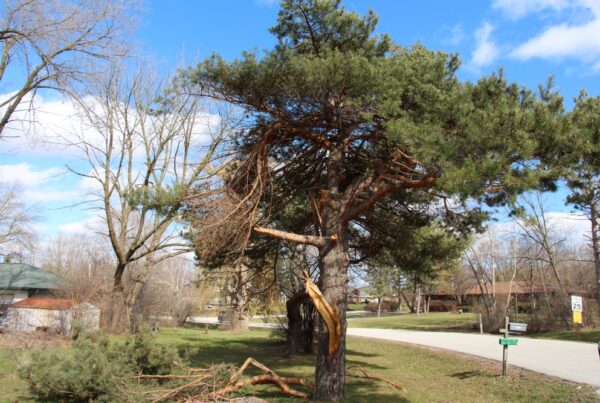
Structural Failure – Ice and heavy snow are immense weight burdens. Trees with poor structural integrity or “included bark” are at high risk for branch breakage and splitting under the load.
Environmental stress from extreme cold often presents itself as latent injury – the damage that occurred in mid-winter exists but doesn’t show any visible signs until spring.
Understanding how cold impacts your trees is the first step toward effective Plant Health Care (PHC) and long-term preservation. Contact us today for a consultation and we’ll customize a maintenance program for you.